A specialized course on inventorying methodologies, documentation ethics, and the role of local communities, designed for committed researchers and heritage practitioners.
What is the fundamental difference between safeguarding, inventorying, and documentation? Did you know that many heritage projects fail because these concepts are often confused?
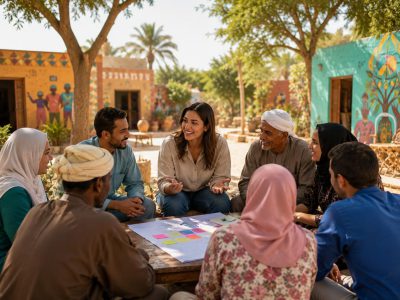
This course takes you directly into the heart of fieldwork, showing you how to prepare an inventory in accordance with international standards, engage local communities in a meaningful and ethical manner, and avoid the mistakes that can undermine the credibility and legitimacy of your heritage work.
By the end of this course, the learner/ trainee will be able to:
✓ Distinguish clearly between safeguarding, inventorying, and documentation, illustrated through a real-life case study of traditional hand-weaving in Akhmim.
✓ Develop an inventory of Intangible Cultural Heritage step by step.
✓ Understand why local communities are at the center of safeguarding efforts and how to build effective and respectful partnerships with them.
✓ Apply the complete ethical framework governing inventorying and documentation, including what is and is not acceptable practice.
Course Features
- Lectures 8
- Quiz 0
- Duration 1680:00:00
- Course Duration 08:39:00
- Skill level All levels
- Language Arabic
- Students 0
- Assessments Yes
Curriculumm
- 1 Section
- 8 Lessons
- 10 Weeks
- Safeguarding Intangible Cultural Heritage in accordance with the 2003 UNESCO Convention8
- 1.1The fundamental distinctions between safeguarding, inventorying, and documentation within the framework of the 2003 UNESCO Convention.
- 1.2Case study: Understanding the differences between safeguarding, inventorying, and documentation through the example of traditional hand-weaving in Akhmim.
- 1.3Inventorying as the first proactive step in the safeguarding process.
- 1.4Steps for preparing an inventory of Intangible Cultural Heritage.
- 1.5The role of local communities in safeguarding Intangible Cultural Heritage (Part 1)
- 1.6The role of local communities in safeguarding Intangible Cultural Heritage (Part 2)
- 1.7Ethics in Inventorying and Documentation (Part 1)
- 1.8Ethics in Inventorying and Documentation (Part 2)

Requirements
- Researchers and academics in the fields of heritage and anthropology
- Professionals working in governmental institutions and non-governmental organizations concerned with cultural heritage.
- Individuals currently involved in, or planning to work on, field documentation projects
- Participants who have completed Part One and wish to progress to the next